💱 Some General Information About Forex
Guided by Robin

Forex Explained Simply: How Money Moves Around the World
Let's kick things off with a crash course in forex trading. Imagine you're planning an epic adventure abroad, and you need to exchange your local currency for the currency of your destination. Forex trading operates on a similar principle, but instead of swapping cash for travel, you're trading currencies to profit from fluctuations in exchange rates. The forex market is like a bustling marketplace where currencies are bought and sold around the clock, offering endless opportunities for savvy traders like yourself to capitalize on global economic trends.
What Is Forex, And Why Is Everyone Talking About It?
So what’s actually happening behind all the hype?
At its core, forex trading is pretty simple: you’re buying one currency while selling another. That’s why everything in the forex market is traded in currency pairs.
Think of it like this, you’re not just buying the euro or the dollar, you’re comparing them. For example, the EUR/USD shows how strong the euro is compared to the US dollar at any given moment.
When the price moves, it’s not random. It reflects what’s happening in the real world, things like economic news, interest rates, and global events all push currencies up or down.
👉 And this is where it gets interesting:
Once you start understanding how currency pairs move, you stop guessing and start seeing patterns. That’s the point where trading goes from confusing… to something you can actually learn and improve at.
Why Would You Trade Forex?
Let’s answer the real question most beginners have: why should you even care about forex trading?
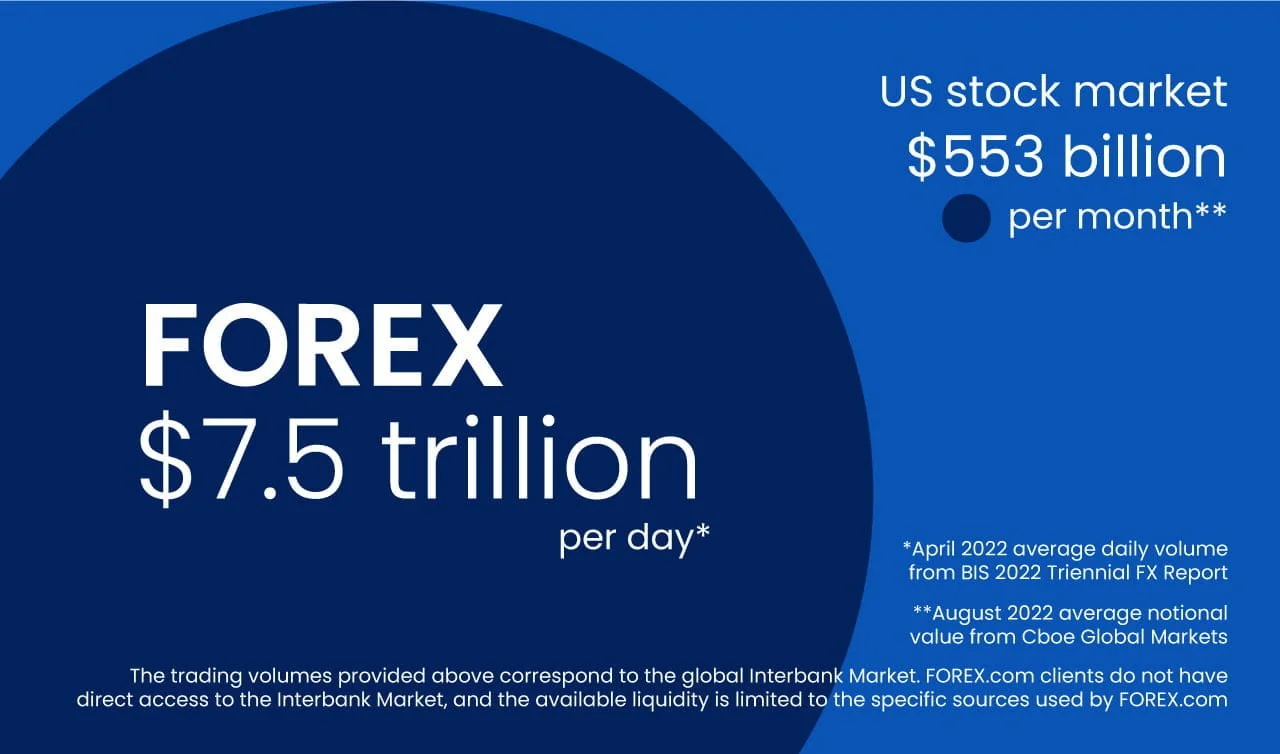
Forex is one of the largest and most active financial markets in the world, where you trade currencies through currency pairs and try to understand how their value changes over time.
What makes it interesting is that nothing moves randomly. The forex market reacts to real-world events like economic news, interest rates, and global changes. Once you start understanding this, you begin to see trading less as guessing and more as reading patterns.
For many people, forex becomes a skill-based challenge. You learn how to analyse charts, manage risk, and make more structured decisions instead of emotional ones.
Another reason it’s popular is flexibility, the market is open 24 hours during the week, so you can learn and practice around your own schedule.
But the key thing to understand is this: forex trading is not about quick money. It’s about building knowledge step by step and improving over time.

Exploring Currency Pairs
Now, let’s take a closer look at currency pairs, the foundation of all forex trading.
In the forex market, you always trade one currency against another. Each currency pair has its own behavior, movement patterns, and level of volatility. Understanding how these pairs work is essential if you want to trade with confidence.
Some pairs, like the EUR/USD, are considered the most popular and beginner-friendly. They are known for their high liquidity, tighter spreads, and more stable price movements. These are often called major currency pairs, and they’re usually the best place to start.
Other pairs, such as AUD/JPY or GBP/NZD, are more volatile. These pairs can move faster and offer bigger opportunities, but they also come with higher risk. They’re often preferred by more experienced traders who are comfortable with price swings.
By learning the characteristics of different currency pairs, including volatility, trading sessions, and market behavior, you’ll be able to make smarter trading decisions and spot opportunities more effectively.
👉 If you want to fully understand how currency pairs work and which ones you should focus on, continue to the next page.
💱 What Are Currency Pairs?
Understand how every forex trade is built around two currencies and why they move against each other.
🌍 Major vs Minor Pairs
Learn the difference between popular pairs like EUR/USD and less-traded currencies, and why it matters.
📊 Why Prices Move
Discover what actually influences currency prices, from news events to global economic shifts, everything connects and affects the markets.
⚡ How to Start Reading Pairs
Get a simple introduction to how traders analyse currency pairs and spot potential opportunities.
⚠️ What Nobody Tells You About Forex!
Let’s be honest for a second,

Forex looks exciting, fast charts, big profits, financial freedom…
But most beginners walk in with the wrong expectations.
Around 70–90% of traders lose money
Most quit within the first 1–2 years
And many never even learn proper risk management
💭 So why do people still trade?
Because the ones who do succeed:
Treat it like a skill, not gambling
Focus on learning before earning
Stick to a clear strategy
👉 The difference isn’t luck, it’s discipline + education
🧠 Reality check:
If you’re reading this and actually learning step by step,
you’re already ahead of most beginners
NOT everything is shared publicly
Access The Inner Circle
Limited access. Reviewed manually.
🧠 The Smart Way to Start Forex (Without Blowing Your Account)
Before you ever risk real money, understand this:
Professional traders don’t start by “going all in”,
They start by:
Practicing on demo accounts
Learning how the market moves
Understanding risk (this is EVERYTHING)
💸 The biggest beginner mistake:
Putting real money in too early.
👉 That’s how most people lose money.
✅ The smarter path:
Learn the basics (you’re doing this now)
Watch how markets behave
Start small, VERY small
⚡ Why this matters:
Your broker is your foundation
Bad broker = bad execution
Bad spreads = less profit
Bad platform = mistakes
👉 That’s why choosing the right one matters from day one.
🚀 Ready to Take the First Real Step?
Now that you understand how Forex actually works,
it’s time to move from learning → doing.
👇 Continue to the next step and start your journey properly.
If You’re Serious About Forex, This Matters

Your broker can make or break your trading experience
Choose one that gives you the tools to actually improve
👉 Start smart from day one
Why Trade Forex CFD’s With Vantage?
The forex market is the largest in the world, operating 24/5, providing global opportunities for traders
Vantage gives you access to a wide range of forex currency pairs through CFDs, including major, minor, and exotic pairs like EUR/USD, GBP/USD and USD/JPY.
With Vantage, you can leverage your positions, controlling larger trades with less capital. However, it’s important to note that leverage can amplify both potential gains and potential losses. Forex CFD trading involves risk, with currency values affected by political, global and economic factors. Vantage provides essential risk management tools like stop-loss orders and negative balance protection.
For a guide to some common terms used in forex, see our forex terminology guide.
Ready to get started? Open a live account with Vantage and begin trading Forex CFDs today!
Understanding How the Forex Market Really Moves
It’s not random, there’s always a reason behind price movements
The forex market might look chaotic at first, but there’s always logic behind the movement. Currency prices change based on real-world factors like economic data, interest rates, and global events. When a country’s economy is strong, its currency often gains value. When uncertainty increases, currencies can weaken or become more volatile.
For beginners, this is an important shift in mindset. Instead of seeing charts as random lines, you start to understand that every move is a reaction to something happening in the world. This is what makes forex trading both challenging and interesting, there’s always a bigger picture behind the price.
Learning to connect market movement with real-world events is one of the first steps toward thinking like a trader.
Why Most Beginners Struggle (And How to Avoid It)
Small mistakes early on can make a big difference later
A lot of people get into forex trading with the wrong expectations. They focus on quick profits, jump between strategies, or risk too much too early. This usually leads to frustration and confusion.
The reality is that trading is a skill. Like anything else, it takes time to understand how the forex market behaves. The traders who improve are the ones who slow down, focus on the basics, and stay consistent.
If you avoid common beginner mistakes, like overtrading, ignoring risk, or following random advice online, you already put yourself in a much stronger position. Progress in forex isn’t about doing more, it’s about doing things the right way.
Forex FAQ’s
-
We provide completely free trading education across multiple markets, including forex trading, crypto, stocks, gold, oil, and CFDs. Our goal is to help beginners understand how financial markets work in a simple and structured way.
Alongside our courses, we also offer access to Robin’s Inner Circle, a more focused learning environment for people who want to take things a step further. There’s a short selection process to keep the quality high, but it’s still completely free to join.
You’re free to explore all the available material at your own pace and build your knowledge step by step before moving forward.
-
Getting started with forex trading is easier than most people think. The first step is simply learning the basics, understanding how the forex market works, what currency pairs are, and how prices move.
From there, you can go through the course step by step, starting with the fundamentals and gradually building your knowledge. There’s no need to rush or risk money early on, the focus should always be on understanding first.
Once you feel more confident, you can start exploring charts, practising, and developing your own approach over time. Once you have entered the level op being profitable you should consider applying here!
-
What makes us different is our focus on keeping things simple, real, and beginner-friendly. We don’t overcomplicate trading or make unrealistic promises.
Everything we share is designed to help you understand the forex market properly, instead of just giving you random strategies or shortcuts. We focus on building a strong foundation, because that’s what actually helps people improve over time.
Plus, all of our core content is completely free, so you can learn at your own pace without pressure.
-
Yes, but only if you approach it the right way.
Forex trading isn’t a shortcut to quick money, and that’s where a lot of people get it wrong. It’s a skill, just like anything else, and it takes time to understand how the forex market really works. The reason so many people are drawn to it is because of its size, accessibility, and the fact that it’s active 24 hours a day during the week.
At its core, forex is about understanding how currency pairs move and why. These movements are influenced by real-world factors like economic data, interest rates, and global events. Once you start to see that connection, trading becomes less about guessing and more about understanding patterns and behaviour.
For beginners, the biggest value isn’t just potential profit, it’s learning how to think differently. You develop patience, discipline, and a better understanding of risk. If you focus on building those skills first, forex trading can absolutely be worth learning over time.
-
Forex trading does involve risk, but that doesn’t mean it’s the same as gambling.
The difference comes down to how you approach it. If you’re entering trades randomly without understanding the market, then yes, it becomes gambling. But if you’re learning how the forex market works, analysing currency pairs, and managing your risk properly, then it becomes a skill-based activity.
Most beginners lose money not because forex is impossible, but because they rush the process. They skip learning, use too much leverage, or follow random advice online instead of building their own understanding.
As for how long it takes to learn, that depends on consistency. Some people stay stuck for months because they jump around without a clear structure. Others start understanding the basics within weeks by focusing on one step at a time.
The key is patience. If you treat forex trading as something you improve at over time, rather than something you “win” quickly, you’ll already be ahead of most beginners.
-
❓ Can beginners start forex trading, and how much do you need?
Yes, beginners can definitely start learning forex trading, and the good news is you don’t need a lot of money to begin, at least not at the start.
The basics are simple: you trade currency pairs and learn how their value changes in the forex market. But where most beginners go wrong is jumping in too quickly with real money, without understanding what they’re doing.
A smarter approach is to start by learning the fundamentals first. Focus on how prices move, how different pairs behave, and how risk management works. Many traders begin by practising and building confidence before putting any real money on the line.
As you improve, there naturally comes a point where learning alone isn’t enough. Trading with real capital, even a small but meaningful amount, helps you take things more seriously and experience the market in a more realistic way.
In general, traders who commit a bit more capital tend to approach the process with more focus and discipline, compared to those trading with very small amounts just to “try it out.”
The key is to start smart, build your knowledge step by step, and only scale up when you feel ready. That’s how you give yourself the best chance to actually improve in the long run.
What Makes Forex Different From Other Markets?
Why so many people are choosing to learn forex trading
One of the biggest reasons people are drawn to forex trading, is how accessible it is. The market is open 24 hours a day during the week, which means you can learn and trade around your own schedule. This makes it especially attractive for students and young professionals across Europe.
Another key advantage is liquidity. The forex market is the largest financial market in the world, which means trades can be executed quickly and efficiently. Combined with the wide range of currency pairs available, traders have constant opportunities to learn and observe how price moves.
Unlike some other markets, you don’t need a huge amount of capital to get started learning forex. What matters more is understanding how the market works and building your knowledge step by step.

Become Partner of Trade With Robin
Structured funnels.
Long-term monetization.
Serious partners only.

Nice, you’ve just built your foundation in forex trading.
You now understand how the forex market works, what currency pairs are, and why prices move the way they do. That already puts you ahead of most beginners.
But this is where things actually start to get interesting.
Because knowing the basics is one thing…
👉 Learning how to apply them is what really makes the difference.
The next step is to go deeper:
How charts actually move
How traders spot opportunities
And how to approach the market with a clear plan
Take it step by step, stay consistent, and focus on understanding, not rushing.
Ready to keep going?
Forex trading has quickly become one of the most popular ways for beginners to explore the financial markets, especially across Europe. With more people looking for flexible ways to build skills online, the forex market stands out because of its accessibility, liquidity, and 24-hour availability. Unlike traditional stock markets, forex allows you to trade currencies at almost any time during the week, making it attractive for students and young professionals who want to learn at their own pace.
At its core, forex trading is about exchanging one currency for another, which is why everything revolves around currency pairs. When you see a pair like EUR/USD, you’re looking at the value of the euro compared to the US dollar. These prices are constantly moving due to global supply and demand, which is influenced by economic data, central bank decisions, interest rates, and major world events. Understanding these movements is what allows traders to identify potential opportunities in the market.
One of the key reasons the forex market is so widely discussed is its sheer size. It is the largest financial market in the world, with trillions of dollars traded every single day. This high level of activity means there is always movement, whether the market is trending strongly or moving within smaller ranges. For beginners, this creates both opportunity and risk, which is why learning the fundamentals is so important before placing any trades.
A common mistake many new traders make is focusing too much on quick profits instead of building real understanding. Forex trading is not about guessing or relying on luck, it’s about learning how the market behaves over time. This includes understanding how different currency pairs react during various trading sessions, how volatility changes throughout the day, and how news events can impact price movements. By taking the time to learn these basics, you create a much stronger foundation for long-term improvement.
Another important concept in forex trading is risk management. Even experienced traders don’t win every trade, which is why protecting your capital is essential. This means using smaller position sizes, avoiding overtrading, and staying consistent with a clear approach. For beginners, developing these habits early can make a significant difference in how they progress over time.
The good news is that forex trading is a skill that can be developed step by step. With the right mindset, access to quality education, and consistent practice, it becomes easier to understand how the market works. Many traders start by observing charts, learning how price moves, and gradually building confidence before taking things further. This process takes time, but it’s what separates those who improve from those who give up too early.
As more people continue to discover forex trading through social media and online communities, it’s important to focus on reliable information and structured learning. Not everything you see online reflects how the market actually works, which is why taking a clear and simple approach is often the best way to start. By focusing on fundamentals first, you avoid unnecessary confusion and build a stronger understanding from the beginning.
If you’re new to forex, the most important step is simply getting started with the right mindset. You don’t need to know everything at once. What matters is building your knowledge gradually, staying consistent, and learning how the market behaves over time. The more you understand the basics of forex trading, currency pairs, and market movements, the more confident you’ll become as you continue your journey.